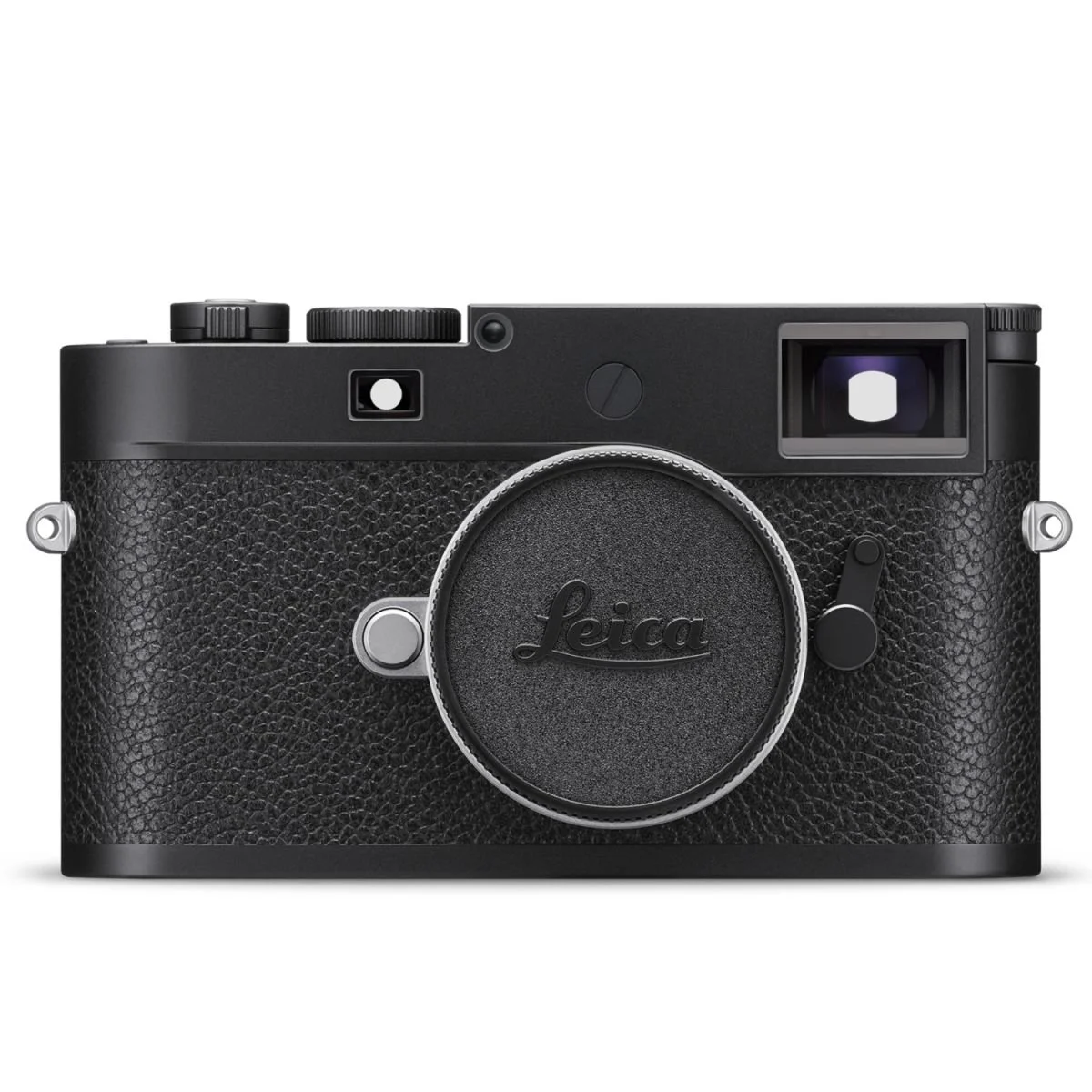
Leica M11-P
The production of Leica M11-P started in 2023357. Leica M11-P didn't have red dot and had a better protected display covered with sapphire glass357. The Leica M11-P was the first Leica camera to comply with the Content Authenticity Initiative (CAI) industry standard374, making picture manipulation traceable and proving the photographer's copyright357.
While the Leica M11's rangefinder was framed by bright chrome bars on the top and bottom, the Leica M11-P's chrome bars were dark, similar to those of the Leica M11 Monochrom374.
Sapphire Glass
The cover glass over the rear display was significantly stronger and highly resistant to abrasions, eliminating the need for protective foil374. While the M10-P used Corning Gorilla Glass, Leica chose to revert to sapphire glass, which was previously used on the Leica M9-P and the Leica M-P (Typ 240)374. This material was primarily found in high-end wristwatches and was challenging to manufacture at the size required for a camera display374. As a result, sapphire glass was a rare and costly option; however, it offered the highest level of scratch resistance374.
Finishes
The Leica M11-P came in two finishes: silver and black374. Similar to the standard Leica M11, the top plate of the silver variant of the Leica M11-P was milled from solid brass374. The black Leica M11-P appeared even more discreet than the silver version, and its aluminum top plate contributed to its lighter weight374.
Storage
Leica increased the internal memory of the Leica M11-P from 64 gigabytes to 256 gigabytes374. This four-fold increase gave the Leica M11-P the same storage capacity as many laptops and more than most smartphones—a feature that was only matched by the Leica M11 Monochrom, which had been a precursor for several of the Leica M11-P's characteristics374.
The internal memory of the Leica M11 was one of its standout features, implemented in response to a growing trend: many photographers transferred their images directly from the camera to their smartphones374. This shift made the Leica Fotos app an essential tool and rendered SD cards as mass storage devices that could have theoretically remained in the camera indefinitely374.
As a result, Leica decided it was more practical to integrate mass storage directly into the camera374. Consequently, the internal memory of the standard Leica M11 was expanded from 64 GB to 256 GB in the Leica M11-P374. This meant that even when the SD card was full, the Leica M11-P still had ample built-in storage for extended shooting sessions374.
Content Authenticity Initiative (CAI)
The Leica M11-P embedded images with a digital signature in accordance with the Content Authenticity Initiative (CAI)372. In fact, the Leica M11-P was the world's first camera to support the verification standard established by the CAI, which was originally founded by Adobe372. The CAI included an increasing number of tech and media companies that collaborated to restore the credibility of visual content in an era dominated by AI and digital manipulation372.
A CAI-capable camera required specialized hardware, notably a crypto chip that securely stored a digital certificate in an encrypted, externally inaccessible repository372. For the Leica M11-P, Leica applied for and installed an individual certificate for every single camera372. These certificates were supplied by D-Trust Ltd, a subsidiary of the Bundesdruckerei Group, which specialized in IT security372. This allowed the Leica M11-P to embed an unalterable 'signature' in every image at the time of capture, based on the certificate372. In addition to standard metadata, this signature contained copyright information and a highly compressed version of the original image372. Any subsequent modifications—such as cropping, sharpening, changing the resolution, or saving the image in a different format—were automatically documented in the signature as a textual description372.
As a result, anyone with access to the image file could verify its provenance using specialized digital tools or through an online platform like [contentcredentials.org/verify]372.
It was important to note that the CAI was still in its early stages, and at the time of this article, the Leica M11-P was the only camera offering this type of content authentication372. Contrary to many photographers' initial hopes, CAI capability could not be retrofitted to existing cameras via a firmware update, as those cameras had been designed without the necessary crypto chip372. Future camera developments, especially in the premium segment, were likely to take CAI compatibility into account372. At that time, this feature distinctly set the Leica M11-P apart372. While Leica was not the only camera manufacturer involved with the CAI, it was one of the first372. At the time of writing, Adobe was the only participating software company, and even in Photoshop and Lightroom, the Content Credentials feature was still in beta, with some tools not fully logging all editing steps372. The technology was an ongoing work in progress and was likely to continue to evolve372.
Verifying the credentials of a CAI-compliant photograph was possible only for those with access to the actual image file372. Images could still be manipulated by third parties, but all changes—whether covert or legitimate—were meticulously documented and could be easily compared with the original recording, which remained securely stored372.
The goal of the Content Authenticity Initiative was not to prevent image manipulation but to make it completely transparent372. This was particularly relevant given that the line between image processing and manipulation was not always clear372. Introducing transparency was expected to foster greater trust in digital photography and the authenticity of the presented content372.
Variants
Leica M11-P Chicago Edition 17 - this camera was unveiled to celebrate the grand opening of the Leica Store Chicago (800 N Michigan Avenue Chicago IL, 60611 United States) on April 15, 2026. This limited-edition camera featured a black finish and boysenberry leatherette, honoring the building's origins from 1917. It became available exclusively at the Leica Store Chicago starting April 30, 2026.
Leica M11-P in a metal grey paint finish was introduced on May 28, 2026. This camera was not part of a limited production series but was rather a permanent addition to the portfolio.