FILM ADVANCE ACCESSORIES
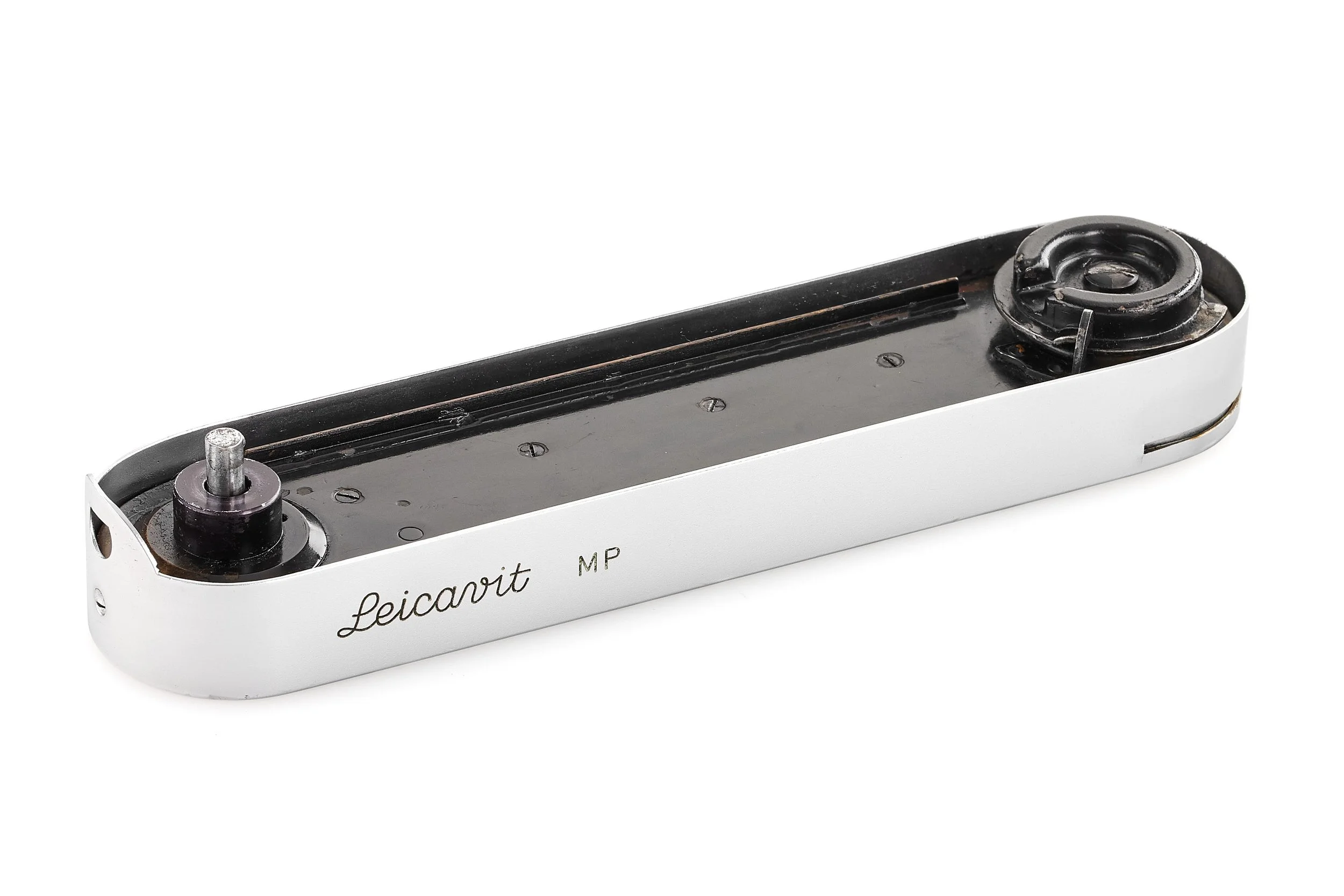
LEICAVIT TRIGGER BASE
To understand the evolution of film advance devices for bayonet mount cameras, it is important to examine the events that led to the introduction of the Leicavit for screw mount cameras, codenamed SYOOM, which came into existence in 1953. The reader is encouraged to explore more on the "Film Advance Accessories for Screw Mount Leicas" page of this website.
One year after the introduction of the serial production version of the Leicavit rapid winder for screw mount cameras, codenamed SYOOM, Leitz launched the Leica M3. Alfred Eisenstaedt, one of the leading photographers for Life magazine, had a great relationship with Leitz514. This enabled him to be among those who were loaned a Leica M3 just months after Photokina Internationale Photo- und Kino-Ausstellung 1954 for the purpose of field testing and appraisal514.
In a letter dated August 1954 to Alfred Boch, the managing director of Ernst Leitz in New York, Alfred Eisenstaedt expressed his admiration for the Leica M3 camera514. However, he raised a concern about the film advance lever, suggesting the possibility of reinstating the thumb wheel that he had been very satisfied with on his Leica IIIc and Leica IIIf cameras514. Alfred Eisenstaedt made another suggestion regarding the Leica M3 camera by pointing out that it needed a Leicavit rapid winder, just like Leica IIIf514. This inquiry eventually led Leitz to develop the Leica MP camera in 1956. More information about the development of that camera can be found on the page titled "Leica MP of 1956".
The the pre-production Leica MP model cameras that were created as a result of this inquiry, served as "test beds" for the Leicavit MP, which was officially introduced alongside the first Leica MP models in 1956574.
March 1955
There were many variants of Leicavit rapid winders compatible with bayonet mount Leica cameras, and they could be divided into 3 big categories:
- Prototype Leicavit winders introduced before the announcement of Leica MP of 1956
- Leicavit MP winder introduced with the Leica MP of 1956, that was also compatible with Leica M2, Leica M1 and Leica MD
- Leicavit winders that were produced in the 21st century
Variants
Variant 1 - March 1955
Variant 1 was attached to the Leica M3-0011* and Leica M3-0018* cameras from March 1955. These cameras were the first prototypes of the original Leica MP, in March 1955514. The author of this website came to possession of the photograph(s) of Leica M3-0018* and noted the following external attributes of the Leicavit:
- chrome in finish
- "Leicavit MP" engraving was featured on the left on the front of the device. "Leicavit" was engraved in cursive with a short L, and "MP" was engraved in print letters. The author believed that this device was later adapted to the camera.
- no engravings in the center on the front of the device
- no engravings on the right on the front of the device
- side mounted sliding lock/arm, which is usually a very snug fit and required a some effort to get the winder seated properly
- locking lever pointing up
Variant 2 - August 1955
Variant 2 was attached to the Leica M3-1052* camera from August 1955. This camera was a prototype of the original Leica MP. The author of this website came to possession of the photograph(s) of Leica M3-1052* and noted the following external attributes of the Leicavit:
- chrome in finish
- no engravings on the left on the front of the device
- "Leicavit" engraving in the center on the front of the device. "Leicavit" was engraved in cursive with a short L.
- "Ernst Leitz GmBH (new line) Wetzlar (new line) Germany" engraving was on the right on the front of the device
- no engravings in the center on the rear of the device
- no engravings on the right on the rear of the device
- "M3-1052*" was engraved on the bottom of the device (the author learned this from Mr. Lars Netopil's "The Development of the Original Leica MP" presentation at the Leica Society International Conference & Annual Meeting on October 24, 2025).
- side mounted sliding lock/arm, which is usually a very snug fit and required a some effort to get the winder seated properly
- locking lever pointing up
Variant 3 - August 1955
Variant 3 was attached to the Leica M3-1053* camera from August 1955. This camera was a prototype of the original Leica MP. The author of this website came to possession of the photograph(s) of Leica M3-1053* and noted the following external attributes of the Leicavit:
- black paint in finish
- "Leicavit MP" engraving was featured on the left on the front of the device. "Leicavit" was engraved in cursive with a short L, and "MP" was engraved in print letters. The author believed that this device was later adapted to the camera.
- no engravings in the center on the front of the device
- no engravings on the right on the front of the device
- "Ernst Leitz GmBH (new line) Wetzlar (new line) Germany" engraving was in the centre on the rear of the device
- no engravings on the right on the rear of the device
- side mounted sliding lock/arm, which is usually a very snug fit and required a some effort to get the winder seated properly
- locking lever pointing up
Variant 4 - October 1955
Variant 4 was attached to the Leica M3-1083* camera from October 1955. This camera was a prototype of the original Leica MP. The author of this website came to possession of the photograph(s) of Leica M3-1083* and noted the following external attributes of the Leicavit:
- chrome in finish
- "Leicavit" engraving on the left on the front of the device. "Leicavit" was engraved in cursive with a short L.
- no engravings in the center on the front of the device
- no engravings on the right on the front of the device
- "Ernst Leitz GmBH (new line) Wetzlar (new line) Germany" engraving was in the centre on the rear of the device
- no engravings on the right on the rear of the device
- side mounted sliding lock/arm, which is usually a very snug fit and required a some effort to get the winder seated properly
- locking lever pointing up
- "auf - open & zu - close" was engraved around tripod socket.
- tripod socket was on the right, looking from the front of the device
- camera's film-advance mechanism was engaged via drive post of Leicavit that coupled to the film winding shaft of the camera
- trigger (winding Lever / arm) had thick shape, with the tip similar to surgical scalpel edge
- trigger (winding Lever / arm) lock had a button release to swing the lever into its track
- raised, donut shaped (not a flat) locking plate
Variants 5a, 5b, 5c and 5d - November 1955
Variant 5a was attached to the Leica M3D-1 camera from November 1955. This camera was a prototype of the original Leica MP. The author of this website came to possession of the photograph(s) of Leica M3D-1 and noted the following external attributes of the Leicavit:
- black paint in finish
- side mounted sliding lock/arm, which is usually a very snug fit and required a some effort to get the winder seated properly
- locking lever pointing up
Variant 5b was attached to the Leica M3D-2 camera from November 1955. This camera was a prototype of the original Leica MP. The author of this website came to possession of the photograph(s) of Leica M3D-2 and noted the following external attributes of the Leicavit:
- black paint in finish
- "Leicavit" engraving was featured on the left on the front of the device. "Leicavit" was engraved in cursive with a short L.
- no engravings in the center on the front of the device
- no engravings on the right on the front of the device
- "Ernst Leitz GmBH (new line) Wetzlar (new line) Germany" engraving was in the centre on the rear of the device
- no engravings on the right on the rear of the device
- side mounted sliding lock/arm, which is usually a very snug fit and required a some effort to get the winder seated properly
- locking lever pointing up
- tripod socket was on the right, looking from the front of the device
- trigger (winding Lever / arm) had thick shape, with the tip similar to surgical scalpel edge
- trigger (winding Lever / arm) lock had a button release to swing the lever into its track
Variant 5c was attached to the Leica M3D-3 camera from November 1955. This camera was a prototype of the original Leica MP. The author of this website came to possession of the photograph(s) of Leica M3D-3 and noted the following external attributes of the Leicavit:
- black paint in finish
- "Leicavit MP" engraving was featured on the left on the front of the device. "Leicavit" was engraved in cursive with a short L, and "MP" was engraved in print letters. The author believed that this device was later adapted to the camera.
- no engravings in the center on the front of the device
- no engravings on the right on the front of the device
- side mounted sliding lock/arm, which is usually a very snug fit and required a some effort to get the winder seated properly
- locking lever pointing up
Variant 5d was attached to the Leica M3D-4 camera from November 1955. This camera was a prototype of the original Leica MP. The author of this website came to possession of the photograph(s) of Leica M3D-4 and noted the following external attributes of the Leicavit:
On the earlier photograph:
- black paint in finish
- "Leicavit" engraving was featured on the left on the front of the device. "Leicavit" was engraved in cursive with a short L.
- no engravings in the center on the front of the device
- no engravings on the right on the front of the device
- side mounted sliding lock/arm, which is usually a very snug fit and required a some effort to get the winder seated properly
- locking lever pointing up
- trigger (winding Lever / arm) had thick shape, with the tip similar to surgical scalpel edge
- trigger (winding Lever / arm) lock had a button release to swing the lever into its track
On the later photograph:
- black paint in finish
- "Leicavit MP" engraving was featured on the left on the front of the device. "Leicavit" was engraved in cursive with a short L, and "MP" was engraved in print letters. The author believed that this device was later adapted to the camera.
- no engravings in the center on the front of the device
- no engravings on the right on the front of the device
- side mounted sliding lock/arm, which is usually a very snug fit and required a some effort to get the winder seated properly
- locking lever pointing up
Variants 6a, 6b, and 6c - November 1955
Variant 6 was attached to the Leica M3E-1 camera from November 1955. This camera was a prototype of the original Leica MP. The author of this website came to possession of the photograph(s) of Leica M3E-1 and noted the following external attributes of the Leicavit:
On the first photograph, the illustrated device (referred to here as Variant 6a) was later auctioned off in 2013401. It came from the estate of Alfred Eisenstaedt and had a 'M/P' (with the P reversed) sticker on the bottom401. The item featured a special black aluminum handgrip401 and had:
- chrome in finish
- "Leicavit" engraving was featured on the left on the front of the device. "Leicavit" was engraved in cursive with a short L.
- no engravings in the center on the front of the device
- no engravings on the right on the front of the device
- "Ernst Leitz GmBH (new line) Wetzlar (new line) Germany" engraving was in the centre on the rear of the device
- no engravings on the right on the rear of the device
- no engravings under the device
- no engravings inside the device
- side mounted sliding lock/arm, which is usually a very snug fit and required a some effort to get the winder seated properly
- locking lever pointing up
- "auf - open & zu - close" was engraved around tripod socket.
- tripod socket was on the right, looking from the front of the device
- camera's film-advance mechanism was engaged via drive post of Leicavit that coupled to the film winding shaft of the camera
- trigger (winding Lever / arm) had thick shape, with the tip similar to surgical scalpel edge
- trigger (winding Lever / arm) lock had a button release to swing the lever into its track
- raised, donut shaped (not a flat) locking plate
On the second photograph, the illustrated device (referred to here as Variant 6b) was very similar (if not the same) as the Variant 10, chrome version of Leicavit MP manufactured for Leica MP of 1956, Leica M2, Leica M1 and Leica MD, and had:
- chrome in finish
- "Leicavit MP" engraving was featured on the left on the front of the device. "Leicavit" was engraved in cursive with a short L, and "MP" was engraved in print letters. As mentioned above, the author believed that this device was later adapted to the camera.
- no engravings in the center on the front of the device
- no engravings on the right on the front of the device
- side mounted sliding lock/arm, which is usually a very snug fit and required a some effort to get the winder seated properly
- locking lever pointing up
On the third photograph, the illustrated device (referred to here as Variant 6c) was very similar (if not the same) as the Variant 2, attached to Leica M3-1052*, and had:
- chrome in finish
- no engravings on the left on the front of the device
- "Leicavit" engraving in the center on the front of the device. "Leicavit" was engraved in cursive with a short L.
- "Ernst Leitz GmBH (new line) Wetzlar (new line) Germany" engraving was on the right on the front of the device
- no engravings on the right on the rear of the device
- side mounted sliding lock/arm, which is usually a very snug fit and required a some effort to get the winder seated properly
- locking lever pointing up
Variant 7 - 1956
Variant 7 was attached to the Leica M3D-100 camera from 2014 made from original spare parts from 1956. It was very similar (if not the same) as the Variant 9, black version of Leicavit MP manufactured for Leica MP of 1956, Leica M2, Leica M1 and Leica MD. The author of this website came to possession of the photograph(s) of Leica M3D-100 and noted the following external attributes of the Leicavit:
- black paint in finish
- "Leicavit" engraving was featured on the left on the front of the device. "Leicavit" was engraved in cursive with a short L.
- no engravings in the center on the front of the device
- no engravings on the right on the front of the device
- "Ernst Leitz GmBH (new line) Wetzlar (new line) Germany" engraving was in the centre on the rear of the device
- no engravings on the right on the rear of the device
- no engravings under the device
- side mounted sliding lock/arm, which is usually a very snug fit and required a some effort to get the winder seated properly
- locking lever pointing up
- "auf - open & zu - close" was engraved around tripod socket.
- tripod socket was on the right, looking from the front of the device
- camera's film-advance mechanism was engaged via drive post of Leicavit that coupled to the film winding shaft of the camera
- trigger (winding Lever / arm) had thick shape, with the tip similar to surgical scalpel edge
- trigger (winding Lever / arm) lock had a button release to swing the lever into its track
- raised, donut shaped (not a flat) locking plate
Variant 8 - October 1956 - 1966
Variant 8 was manufactured for Leica MP of 1956, and was later manufactured for and compatible with Leica M2, Leica M1 and Leica MD cameras. This variant had:
- black paint in finish
- "Leicavit MP" engraving was featured on the left on the front of the device. "Leicavit" was engraved in cursive with a short L, and "MP" was engraved in print letters.
- no engravings in the center on the front of the device
- no engravings on the right on the front of the device
- "ERNST LEITZ (bigger font size) GMBH (smaller font size ) (new line) WETZLAR (bigger font size) GERMANY (smaller font size)" engraving was in the centre on the rear of the device
- no engravings on the right on the rear of the device
- no engravings under the device
- no engravings inside the device
- side mounted sliding lock/arm, which is usually a very snug fit and required a some effort to get the winder seated properly
- locking lever pointing up
- "auf - open & zu - close" was engraved around tripod socket.
- tripod socket was on the right, looking from the front of the device
- camera's film-advance mechanism was engaged via drive post of Leicavit that coupled to the film winding shaft of the camera
- trigger (winding Lever / arm) had thick shape, with the tip similar to surgical scalpel edge
- trigger (winding Lever / arm) lock had a button release to swing the lever into its track
- raised, donut shaped (not a flat) locking plate
- According the Leica Photography magazine, Volume 11 Number 4, the Leicavit MP for Leica M2 was not available yet in the winter of 1958
- According to "Leica M Compendium" book by Jonathan Eastland, Leicavit MP for Leica M2 was available from 1960 to 1966.
Variant 9 - October 1956 - 1966 - also known as SYOOM-M
Variant 9 (also known as SYOOM-M) was manufactured for Leica MP of 1956, and was later manufactured for and compatible with Leica M2, Leica M1 and Leica MD cameras. It was very similar to Variant 8, except for the styling of the engraving on the rear of the device. This variant had:
- black paint in finish
- "Leicavit MP" engraving was featured on the left on the front of the device. "Leicavit" was engraved in cursive with a short L, and "MP" was engraved in print letters.
- no engravings in the center on the front of the device
- no engravings on the right on the front of the device
- "Ernst Leitz GmBH (new line) Wetzlar (new line) Germany" engraving was in the centre on the rear of the device
- no engravings on the right on the rear of the device
- no engravings under the device
- no engravings inside the device
- side mounted sliding lock/arm, which is usually a very snug fit and required a some effort to get the winder seated properly
- locking lever pointing up
- "auf - open & zu - close" was engraved around tripod socket.
- tripod socket was on the right, looking from the front of the device
- camera's film-advance mechanism was engaged via drive post of Leicavit that coupled to the film winding shaft of the camera
- trigger (winding Lever / arm) had thick shape, with the tip similar to surgical scalpel edge
- trigger (winding Lever / arm) lock had a button release to swing the lever into its track
- raised, donut shaped (not a flat) locking plate
- According the Leica Photography magazine, Volume 11 Number 4, the Leicavit MP for Leica M2 was not available yet in the winter of 1958
- According to "Leica M Compendium" book by Jonathan Eastland, Leicavit MP for Leica M2 was available from 1960 to 1966.
Variant 10 - October 1956 - 1966 - also known as SYOOM-M
Variant 10 (also known as SYOOM-M) was manufactured for Leica MP of 1956, and was later manufactured for and compatible with Leica M2, Leica M1 and Leica MD cameras. This variant had:
- chrome in finish
- "Leicavit MP" engraving was featured on the left on the front of the device. "Leicavit" was engraved in cursive with a short L, and "MP" was engraved in print letters.
- no engravings in the center on the front of the device
- no engravings on the right on the front of the device
- "Ernst Leitz GmBH (new line) Wetzlar (new line) Germany" engraving was in the centre on the rear of the device
- no engravings on the right on the rear of the device
- no engravings under the device
- no engravings inside the device
- side mounted sliding lock/arm, which is usually a very snug fit and required a some effort to get the winder seated properly
- locking lever pointing up
- "auf - open & zu - close" was engraved around tripod socket.
- tripod socket was on the right, looking from the front of the device
- camera's film-advance mechanism was engaged via drive post of Leicavit that coupled to the film winding shaft of the camera
- trigger (winding Lever / arm) had thick shape, with the tip similar to surgical scalpel edge
- trigger (winding Lever / arm) lock had a button release to swing the lever into its track
- raised, donut shaped (not a flat) locking plate
- According the Leica Photography magazine, Volume 11 Number 4, the Leicavit MP for Leica M2 was not available yet in the winter of 1958
- According to "Leica M Compendium" book by Jonathan Eastland, Leicavit MP for Leica M2 was available from 1960 to 1966.
- Some subvariants of this variant, like the one attached to Leica MP-4 and Leica MP-8, had rectangular locking levers and and 5 recessed lines.
Variant 11 - Prototype made in 2001-2002
Variant 11 was a prototype of what would be later known as Leicavit (catalog number 14008). This variant had:
- chrome in finish
- "Leicavit M" engraving was featured on the left on the front of the device. "Leicavit" was engraved in cursive with a short L, and "M" was engraved in print letters.
- no engravings in the center on the front of the device
- no engravings on the right on the front of the device
- "LEICA CAMERA AG (new line) MADE IN GERMANY" engraving was in the centre on the rear of the device
- no engravings on the right on the rear of the device
- no engravings under the device
- no engravings inside the device
- the locking mechanism was similar to a regular base plate lock, with a chrome folding key, the lock knob was black (as opposed to silver, which was very unusual for a chrome finished device)
- "open - auf & close - zu" was engraved around tripod socket
- tripod socket was slightly off center, close to the trigger (winding lever / arm) when in unfolded position
- It featured a mechanical coupling that hooked into the camera's base, allowing the Leicavit to turn the film take-up shaft and advance the film
- trigger (winding Lever / arm) was made of steel, and had a thin shape, with blunter tip
- To unlock the lever, one had to pull the lever backwards slightly and it would then fold up in the slot at the bottom
- flat locking plate, with serial number engraved on it, with catalogue number on it. In the example the author saw, the catalogue number was 14009 (not 14008) and the serial number was M0009.
Variant 12 - Prototype made in 2001-2002
Variant 12 was a prototype of what would be later known as Leicavit (catalog number 14009). This variant had:
- black paint in finish
- "Leicavit M" engraving was featured on the left on the front of the device. "Leicavit" was engraved in cursive with a short L, and "M" was engraved in print letters.
- no engravings in the center on the front of the device
- no engravings on the right on the front of the device
- "LEICA CAMERA AG (new line) MADE IN GERMANY" engraving was in the centre on the rear of the device
- no engravings on the right on the rear of the device
- no engravings under the device
- no engravings inside the device
- the locking mechanism was similar to a regular base plate lock, with a folding key
- "open - auf & close - zu" was engraved around tripod socket
- tripod socket was slightly off center, close to the trigger (winding lever / arm) when in unfolded position
- It featured a mechanical coupling that hooked into the camera's base, allowing the Leicavit to turn the film take-up shaft and advance the film
- trigger (winding Lever / arm) was made of steel, and had a thin shape, with blunter tip
- To unlock the lever, one had to pull the lever backwards slightly and it would then fold up in the slot at the bottom
- flat locking plate, with serial number engraved on it, with catalogue number on it. In the example the author saw, the catalogue number was 14009 and the serial number was 00018.
Variant 13 - Prototype made in 2001-2002 for the Leica MP6 prototype cameras finished in chrome
Variant 13 was a prototype made in 2001-2002 for the 10 (ten) Leica MP6 prototype cameras finished in chrome. This variant had:
- chrome in finish
- "Leicavit M" engraving was featured on the left on the front of the device. "Leicavit" was engraved in cursive with a short L, and "M" was engraved in print letters.
- no engravings in the center on the front of the device
- no engravings on the right on the front of the device
- "LEICA CAMERA AG (new line) MADE IN GERMANY" engraving was in the centre on the rear of the device
- no engravings on the right on the rear of the device
- no engravings under the device
- no engravings inside the device
- the locking mechanism was similar to a regular base plate lock, with a folding key
- "open - auf & close - zu" was engraved around tripod socket
- tripod socket was slightly off center, close to the trigger (winding lever / arm) when in unfolded position
- It featured a mechanical coupling that hooked into the camera's base, allowing the Leicavit to turn the film take-up shaft and advance the film
- trigger (winding Lever / arm) was made of steel, and had a thin shape, with blunter tip
- To unlock the lever, one had to pull the lever backwards slightly and it would then fold up in the slot at the bottom
- flat locking plate, with serial number engraved on it, with catalogue number on it. In the examples the author saw, the catalogue numbers were 14008 and the serial numbers were 00033 and 00034.
Variant 14
Variant 14 was special edition Leicavit-M issued to commemorate 35 years of LHSA, manufactured in 2003, sold separately and also made to match Leica MP Grey Hammertone 'LHSA 1968-2003'. This variant had:
- hammertone in finish
- "Leicavit M" engraving was featured on the left on the front of the device. "Leicavit" was engraved in cursive with a short L, and "M" was engraved in print letters.
- no engravings in the center on the front of the device
- no engravings on the right on the front of the device
- no engravings in the centre on the rear of the device
- "LHSA (logo) (new line) SPECIAL EDITION (new line) 1968-2003" engraved on the right on the rear of the device
- no engravings under the device
- no engravings inside the device
- the locking mechanism was similar to a regular base plate lock, with a folding key
- "open - auf & close - zu" was engraved around tripod socket
- tripod socket was slightly off center, close to the trigger (winding lever / arm) when in unfolded position
- It featured a mechanical coupling that hooked into the camera's base, allowing the Leicavit to turn the film take-up shaft and advance the film
- trigger (winding Lever / arm) was made of steel, and had a thin shape, with blunter tip
- To unlock the lever, one had to pull the lever backwards slightly and it would then fold up in the slot at the bottom
- flat locking plate, with serial number engraved on it, with catalogue number (14443) on it.
Variant 15
Variant 15 was manufactured in 2003 for Leica MP6 camera (catalog number 10311). Later in 2014, it was used on Leica M3D-100 (pre-series of Leica M3D series of 2014) camera. Visually it was very similar to Variant 12 described above. This variant had:
- black paint in finish
- "Leicavit M" engraving was featured on the left on the front of the device. "Leicavit" was engraved in cursive with a short L, and "M" was engraved in print letters.
- no engravings in the center on the front of the device
- no engravings on the right on the front of the device
- "LEICA CAMERA AG (new line) MADE IN GERMANY" engraving was in the centre on the rear of the device
- no engravings on the right on the rear of the device
- no engravings under the device
- no engravings inside the device
- the locking mechanism was similar to a regular base plate lock, with a folding key
- "open - auf & close - zu" was engraved around tripod socket
- tripod socket was slightly off center, close to the trigger (winding lever / arm) when in unfolded position
- It featured a mechanical coupling that hooked into the camera's base, allowing the Leicavit to turn the film take-up shaft and advance the film
- trigger (winding Lever / arm) was made of steel, and had a thin shape, with blunter tip
- To unlock the lever, one had to pull the lever backwards slightly and it would then fold up in the slot at the bottom
- flat locking plate, with serial number engraved on it, with catalogue number (14009) on it.
Variant 16
Variant 16 was manufactured in 2003 for Leica MP anthracite kit (catalog number 10316). This variant had:
- anthracite finish
- "Leicavit M" engraving was featured on the left on the front of the device. "Leicavit" was engraved in cursive with a short L, and "M" was engraved in print letters.
- no engravings in the center on the front of the device
- no engravings on the right on the front of the device
- no engravings on in the centre on the rear of the device
- no engravings on the right on the rear of the device
- no engravings under the device
- no engravings inside the device
- the locking mechanism was similar to a regular base plate lock, with a folding key
- "open - auf & close - zu" was engraved around tripod socket
- tripod socket was slightly off center, close to the trigger (winding lever / arm) when in unfolded position
- It featured a mechanical coupling that hooked into the camera's base, allowing the Leicavit to turn the film take-up shaft and advance the film
- trigger (winding Lever / arm) was made of steel, and had a thin shape, with blunter tip
- To unlock the lever, one had to pull the lever backwards slightly and it would then fold up in the slot at the bottom
- flat locking plate, with serial number engraved on it, with catalogue number (14451) on it.
Variant 17
Variant 17 was relatively rare, manufactured circa 2003, for Leica MP (2003), M7, M6 TTL, M6, M4-P, and M4-2 cameras. This variant had:
- chrome in finish
- "Leicavit MP" engraving was featured on the left on the front of the device. "Leicavit" was engraved in cursive with a short L, and "MP" was engraved in print letters.
- no engravings in the center on the front of the device
- no engravings on the right on the front of the device
- no engravings on in the centre on the rear of the device
- "LEICAVIT M" in print letters engraved on the right on the rear of the device
- "LEICA CAMERA MADE IN GERMANY" in print letters engraved under the device
- no engravings inside the device
- the locking mechanism was similar to a regular base plate lock, with a folding key
- "open - auf & close - zu" was engraved around tripod socket
- tripod socket was slightly off center, close to the trigger (winding lever / arm) when in unfolded position
- It featured a mechanical coupling that hooked into the camera's base, allowing the Leicavit to turn the film take-up shaft and advance the film
- trigger (winding Lever / arm) was made of steel, and had a thin shape, with blunter tip
- To unlock the lever, one had to pull the lever backwards slightly and it would then fold up in the slot at the bottom
- flat locking plate, with serial number engraved on it, with catalogue number (14008) on it.
Variant 18
Variant 18 was relatively rare, manufactured circa 2003, for Leica MP (2003), M7, M6 TTL, M6, M4-P, and M4-2 cameras. This variant had:
- black paint in finish
- "Leicavit MP" engraving was featured on the left on the front of the device. "Leicavit" was engraved in cursive with a short L, and "MP" was engraved in print letters.
- no engravings in the center on the front of the device
- no engravings on the right on the front of the device
- no engravings on in the centre on the rear of the device
- "LEICAVIT M" in print letters engraved on the right on the rear of the device
- "LEICA CAMERA MADE IN GERMANY" in print letters engraved under the device
- no engravings inside the device
- the locking mechanism was similar to a regular base plate lock, with a folding key
- "open - auf & close - zu" was engraved around tripod socket
- tripod socket was slightly off center, close to the trigger (winding lever / arm) when in unfolded position
- It featured a mechanical coupling that hooked into the camera's base, allowing the Leicavit to turn the film take-up shaft and advance the film
- trigger (winding Lever / arm) was made of steel, and had a thin shape, with blunter tip
- To unlock the lever, one had to pull the lever backwards slightly and it would then fold up in the slot at the bottom
- flat locking plate, with serial number engraved on it, with catalogue number (14009) on it.
Variant 19
Variant 19 was very common, manufactured from 2003 until 2010s, for Leica MP (2003), M7, M6 TTL, M6, M4-P, and M4-2 cameras. This variant had:
- black paint in finish
- no engravings on the left on the front of the device
- no engravings in the center on the front of the device
- no engravings on the right on the front of the device
- no engravings on in the centre on the rear of the device
- "LEICAVIT M" in print letters engraved on the right on the rear of the device
- "LEICA CAMERA MADE IN GERMANY" in print letters engraved under the device
- no engravings inside the device
- the locking mechanism was similar to a regular base plate lock, with a folding key
- "open - auf & close - zu" was engraved around tripod socket
- tripod socket was slightly off center, close to the trigger (winding lever / arm) when in unfolded position
- It featured a mechanical coupling that hooked into the camera's base, allowing the Leicavit to turn the film take-up shaft and advance the film
- trigger (winding Lever / arm) was made of steel, and had a thin shape, with blunter tip
- To unlock the lever, one had to pull the lever backwards slightly and it would then fold up in the slot at the bottom
- flat locking plate, with serial number engraved on it, with catalogue number (14009) on it.
Variant 20
Variant 20 was very common, manufactured from 2003 until 2010s, for Leica MP (2003), M7, M6 TTL, M6, M4-P, and M4-2 cameras. This variant had:
- black chrome in finish
- no engravings on the left on the front of the device
- no engravings in the center on the front of the device
- no engravings on the right on the front of the device
- no engravings on in the centre on the rear of the device
- "LEICAVIT M" in print letters engraved on the right on the rear of the device
- "LEICA CAMERA MADE IN GERMANY" in print letters engraved under the device
- no engravings inside the device
- the locking mechanism was similar to a regular base plate lock, with a folding key
- "open - auf & close - zu" was engraved around tripod socket
- tripod socket was slightly off center, close to the trigger (winding lever / arm) when in unfolded position
- It featured a mechanical coupling that hooked into the camera's base, allowing the Leicavit to turn the film take-up shaft and advance the film
- trigger (winding Lever / arm) was made of steel, and had a thin shape, with blunter tip
- To unlock the lever, one had to pull the lever backwards slightly and it would then fold up in the slot at the bottom
- flat locking plate, with serial number engraved on it, with catalogue number (14450) on it.
Variant 21
Variant 21 was very common, manufactured from 2003 until 2010s, for Leica MP (2003), M7, M6 TTL, M6, M4-P, and M4-2 cameras. This variant had:
- chrome in finish
- no engravings on the left on the front of the device
- no engravings in the center on the front of the device
- no engravings on the right on the front of the device
- no engravings on in the centre on the rear of the device
- "LEICAVIT M" in print letters engraved on the right on the rear of the device
- "LEICA CAMERA MADE IN GERMANY" in print letters engraved under the device
- no engravings inside the device
- the locking mechanism was similar to a regular base plate lock, with a folding key
- "open - auf & close - zu" was engraved around tripod socket
- tripod socket was slightly off center, close to the trigger (winding lever / arm) when in unfolded position
- It featured a mechanical coupling that hooked into the camera's base, allowing the Leicavit to turn the film take-up shaft and advance the film
- trigger (winding Lever / arm) was made of steel, and had a thin shape, with blunter tip
- To unlock the lever, one had to pull the lever backwards slightly and it would then fold up in the slot at the bottom
- flat locking plate, with serial number engraved on it, with catalogue number (14008) on it.
Variant 22
Variant 22 was manufactured in 2005 and came as part of the set for the Leica MP3 black paint LHSA Edition set. This variant had:
- black paint finish
- "Leicavit MP" engraving was featured on the left on the front of the device. "Leicavit" was engraved in cursive with a short L, and "MP" was engraved in print letters.
- no engravings in the center on the front of the device
- no engravings on the right on the front of the device
- "LEICA CAMERA AG (new line) SOLMS (new line) GERMANY" engraving was in the centre on the rear of the device
- no engravings on the right on the front of the device
- no engravings under the device
- "LHSA (logo) (new line) SPECIAL EDITION" engraved inside the device
- the locking mechanism was similar to a regular base plate lock, with a folding key
- "open - auf & close - zu" was engraved around tripod socket
- tripod socket was slightly off center, close to the trigger (winding lever / arm) when in unfolded position
- It featured a mechanical coupling that hooked into the camera's base, allowing the Leicavit to turn the film take-up shaft and advance the film
- trigger (winding Lever / arm) was made of steel, and had a thin shape, with blunter tip
- To unlock the lever, one had to pull the lever backwards slightly and it would then fold up in the slot at the bottom
- flat locking plate, with serial number engraved on it, with catalogue number (14460) on it.
Variant 23
Variant 23 was manufactured in 2005 and came as part of the set for the Leica MP3 chrome LHSA Edition set. This variant had:
- chrome finish
- "Leicavit MP" engraving was featured on the left on the front of the device. "Leicavit" was engraved in cursive with a short L, and "MP" was engraved in print letters.
- no engravings in the center on the front of the device
- no engravings on the right on the front of the device
- "LEICA CAMERA AG (new line) SOLMS (new line) GERMANY" engraving was in the centre on the rear of the device
- no engravings on the right on the front of the device
- no engravings under the device
- "LHSA (logo) (new line) SPECIAL EDITION" engraved inside the device
- the locking mechanism was similar to a regular base plate lock, with a folding key
- "open - auf & close - zu" was engraved around tripod socket
- tripod socket was slightly off center, close to the trigger (winding lever / arm) when in unfolded position
- It featured a mechanical coupling that hooked into the camera's base, allowing the Leicavit to turn the film take-up shaft and advance the film
- trigger (winding Lever / arm) was made of steel, and had a thin shape, with blunter tip
- To unlock the lever, one had to pull the lever backwards slightly and it would then fold up in the slot at the bottom
- flat locking plate, with serial number engraved on it, with catalogue number (14461) on it.
Variant 24
Variant 24 was manufactured in 2005 to commemorate 30 years of Leica HISTORICA. This variant had:
- chrome finish
- "Leica (logo) HISTORICA (logo) 1975-2005" engraved on the left on the front of the device
- no engravings in the center on the front of the device
- no engravings on the right on the front of the device
- no engravings on in the centre on the rear of the device
- "LEICAVIT M" in print letters engraved on the right on the rear of the device
- "LEICA CAMERA MADE IN GERMANY" in print letters engraved under the device
- no engravings inside the device
- the locking mechanism was similar to a regular base plate lock, with a folding key
- "open - auf & close - zu" was engraved around tripod socket
- tripod socket was slightly off center, close to the trigger (winding lever / arm) when in unfolded position
- It featured a mechanical coupling that hooked into the camera's base, allowing the Leicavit to turn the film take-up shaft and advance the film
- trigger (winding Lever / arm) was made of steel, and had a thin shape, with blunter tip
- To unlock the lever, one had to pull the lever backwards slightly and it would then fold up in the slot at the bottom
- flat locking plate, with serial number engraved on it, with catalogue number (14459) on it.
Variant 25
Variant 25 was manufactured in 2014 for Leica M3D-5 - Leica M3D-20 cameras. This variant had:
- black paint finish
- "Leicavit" engraving was featured on the left on the front of the device. "Leicavit" was engraved in cursive with a short L.
- no engravings in the center on the front of the device
- no engravings on the right on the front of the device
- "LEICA CAMERA (bigger font) AG (smaller font) (new line) WETZLAR (bigger font) GERMANY (smaller font)" engraving was in the centre on the rear of the device
- no engravings on the right on the rear of the device
- no engravings under the device
- no engravings inside the device
- the locking mechanism was similar to a regular base plate lock, with a folding key
- "open - auf & close - zu" was engraved around tripod socket
- tripod socket was slightly off center, close to the trigger (winding lever / arm) when in unfolded position
- It featured a mechanical coupling that hooked into the camera's base, allowing the Leicavit to turn the film take-up shaft and advance the film
- trigger (winding Lever / arm) was made of steel, and had a thin shape, with blunter tip
- To unlock the lever, one had to pull the lever backwards slightly and it would then fold up in the slot at the bottom
- flat locking plate, with serial number engraved on it, with catalogue number (14896) on it.
Variant 26
Variant 26 was very common, manufactured from 2025, for Leica M-A, MP (of 2003), M6, M7, M6 TTL, M4-P, and M4-2 cameras. This variant had:
- black chrome (officially referred to as "black finish") in finish
- no engravings on the left on the front of the device
- no engravings in the center on the front of the device
- no engravings on the right on the front of the device
- no engravings on in the centre on the rear of the device
- "LEICAVIT M" in print letters engraved on the right on the rear of the device
- "LEICA CAMERA WETZLAR GERMANY" in print letters engraved under the device
- "MADE IN PORTUGAL" (in black front) engraved inside the device
- the locking mechanism was similar to a regular base plate lock, with a folding key
- "open - auf & close - zu" was engraved around tripod socket
- tripod socket was slightly off center, close to the trigger (winding lever / arm) when in unfolded position
- It featured a mechanical coupling that hooked into the camera's base, allowing the Leicavit to turn the film take-up shaft and advance the film
- trigger (winding Lever / arm) was made of steel, and had a thin shape, with blunter tip
- To unlock the lever, one had to pull the lever backwards slightly and it would then fold up in the slot at the bottom
- flat locking plate, with serial number engraved on it, with catalogue number (14676) on it, with an additional washer under the screw visible from the top
Variant 27
Variant 27 was very common, manufactured from 2025, for Leica M-A, MP (of 2003), M6, M7, M6 TTL, M4-P, and M4-2 cameras. This variant had:
- black paint (officially referred to as "glossy black paint finish") in finish
- no engravings on the left on the front of the device
- no engravings in the center on the front of the device
- no engravings on the right on the front of the device
- no engravings on in the centre on the rear of the device
- "LEICAVIT M" in print letters engraved on the right on the rear of the device
- "LEICA CAMERA WETZLAR GERMANY" in print letters engraved under the device
- "MADE IN PORTUGAL" (in black front) engraved inside the device
- the locking mechanism was similar to a regular base plate lock, with a folding key
- "open - auf & close - zu" was engraved around tripod socket
- tripod socket was slightly off center, close to the trigger (winding lever / arm) when in unfolded position
- It featured a mechanical coupling that hooked into the camera's base, allowing the Leicavit to turn the film take-up shaft and advance the film
- trigger (winding Lever / arm) was made of steel, and had a thin shape, with blunter tip
- To unlock the lever, one had to pull the lever backwards slightly and it would then fold up in the slot at the bottom
- flat locking plate, with serial number engraved on it, with catalogue number (14669) on it, with an additional washer under the screw visible from the top
Variant 28
Variant 28 was manufactured in 2024 for Leica M Edition 70 cameras. This variant had:
- platinum finish
- no engravings on the left on the front of the device
- no engravings in the center on the front of the device
- no engravings on the right on the front of the device
- no engravings in the centre on the rear of the device
- "LEICAVIT M" in print letters engraved on the right on the rear of the device
- "LEICA CAMERA WETLZAR GERMANY (followed by XXX / 250 )" in print letters engraved under the device
- "MADE IN PORTUGAL" (in black front) engraved inside the device
- the locking mechanism was similar to a regular base plate lock, with a folding key
- "open - auf & close - zu" was engraved around tripod socket
- tripod socket was slightly off center, close to the trigger (winding lever / arm) when in unfolded position
- It featured a mechanical coupling that hooked into the camera's base, allowing the Leicavit to turn the film take-up shaft and advance the film
- trigger (winding Lever / arm) was made of steel, and had a thin shape, with blunter tip
- To unlock the lever, one had to pull the lever backwards slightly and it would then fold up in the slot at the bottom
- flat locking plate, with serial number engraved on it, without catalogue number on it, with an additional washer under the screw visible from the top
Variant 29
Variant 29 was very common, manufactured from 2025 and available from August 2025, for Leica M-A, MP (of 2003), M6, M7, M6 TTL, M4-P, and M4-2 cameras. This variant had:
- chrome in finish
- no engravings on the left on the front of the device
- no engravings in the center on the front of the device
- no engravings on the right on the front of the device
- no engravings on in the centre on the rear of the device
- "LEICAVIT M" in print letters engraved on the right on the rear of the device
- "LEICA CAMERA WETZLAR GERMANY" in print letters engraved under the device
- "MADE IN PORTUGAL" (in black front) engraved inside the device
- the locking mechanism was similar to a regular base plate lock, with a folding key
- "open - auf & close - zu" was engraved around tripod socket
- tripod socket was slightly off center, close to the trigger (winding lever / arm) when in unfolded position
- It featured a mechanical coupling that hooked into the camera's base, allowing the Leicavit to turn the film take-up shaft and advance the film
- trigger (winding Lever / arm) was made of steel, and had a thin shape, with blunter tip
- To unlock the lever, one had to pull the lever backwards slightly and it would then fold up in the slot at the bottom
- flat locking plate, with serial number engraved on it, with catalogue number (14677) on it, with an additional washer under the screw visible from the top